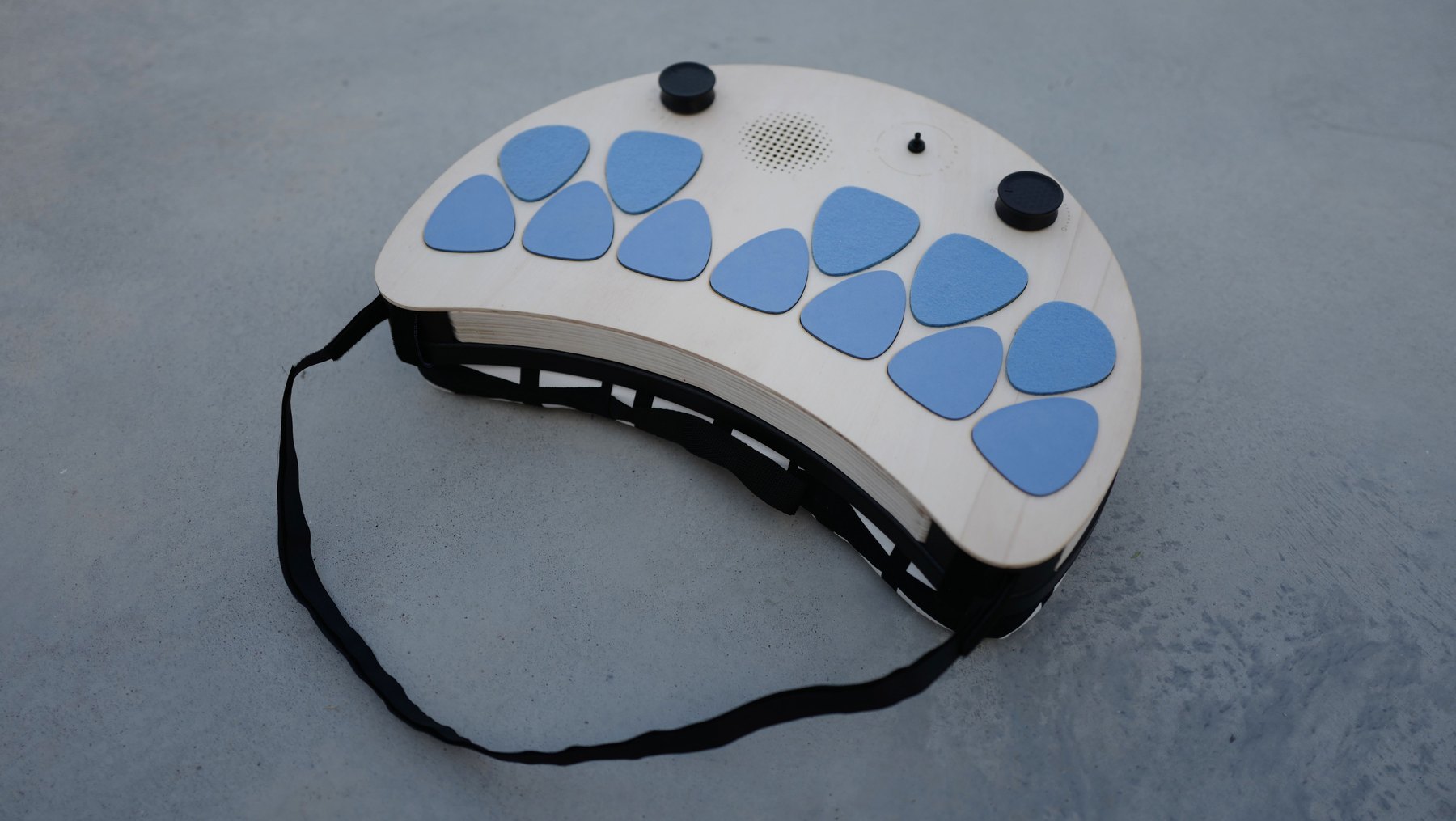
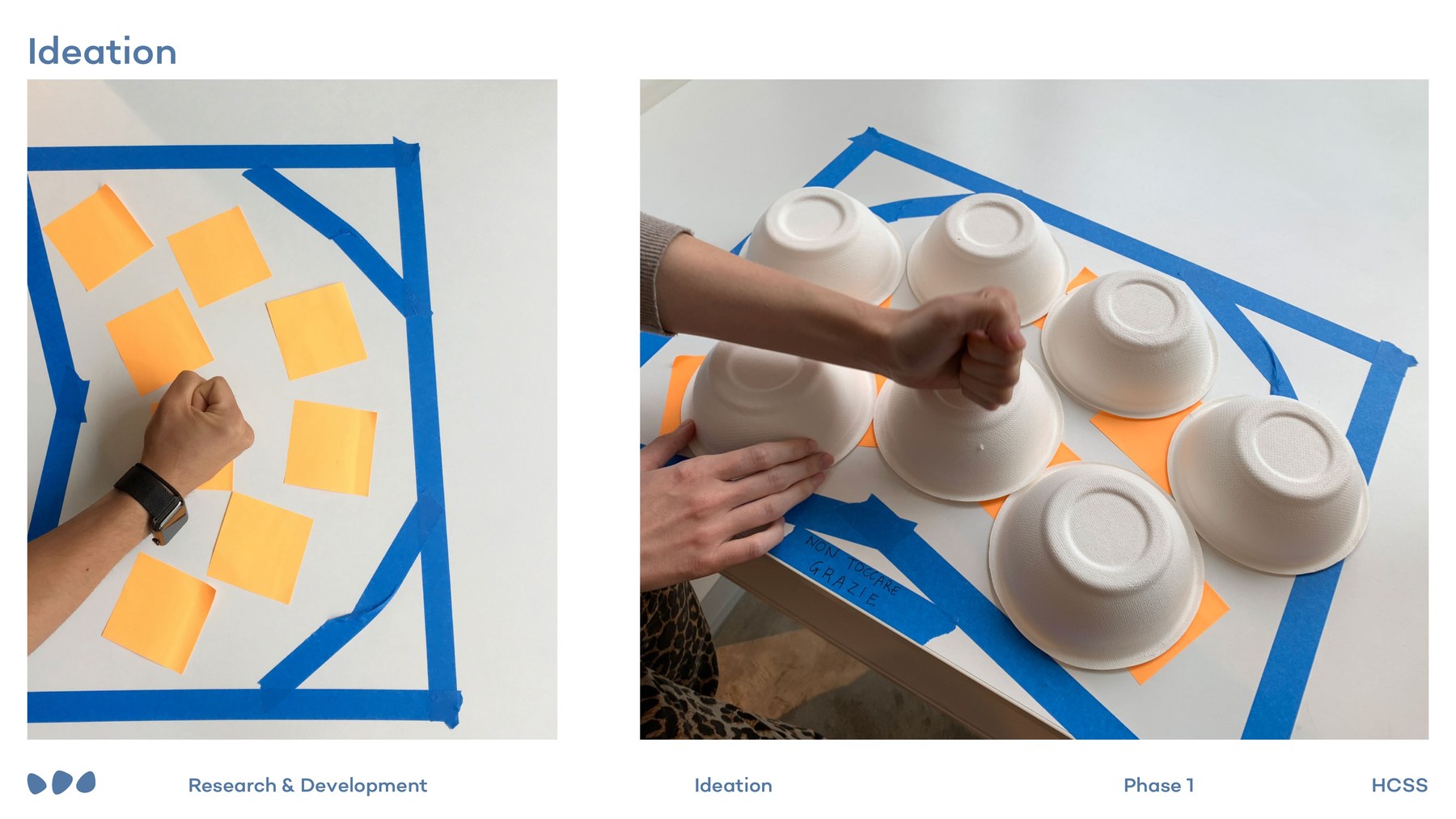
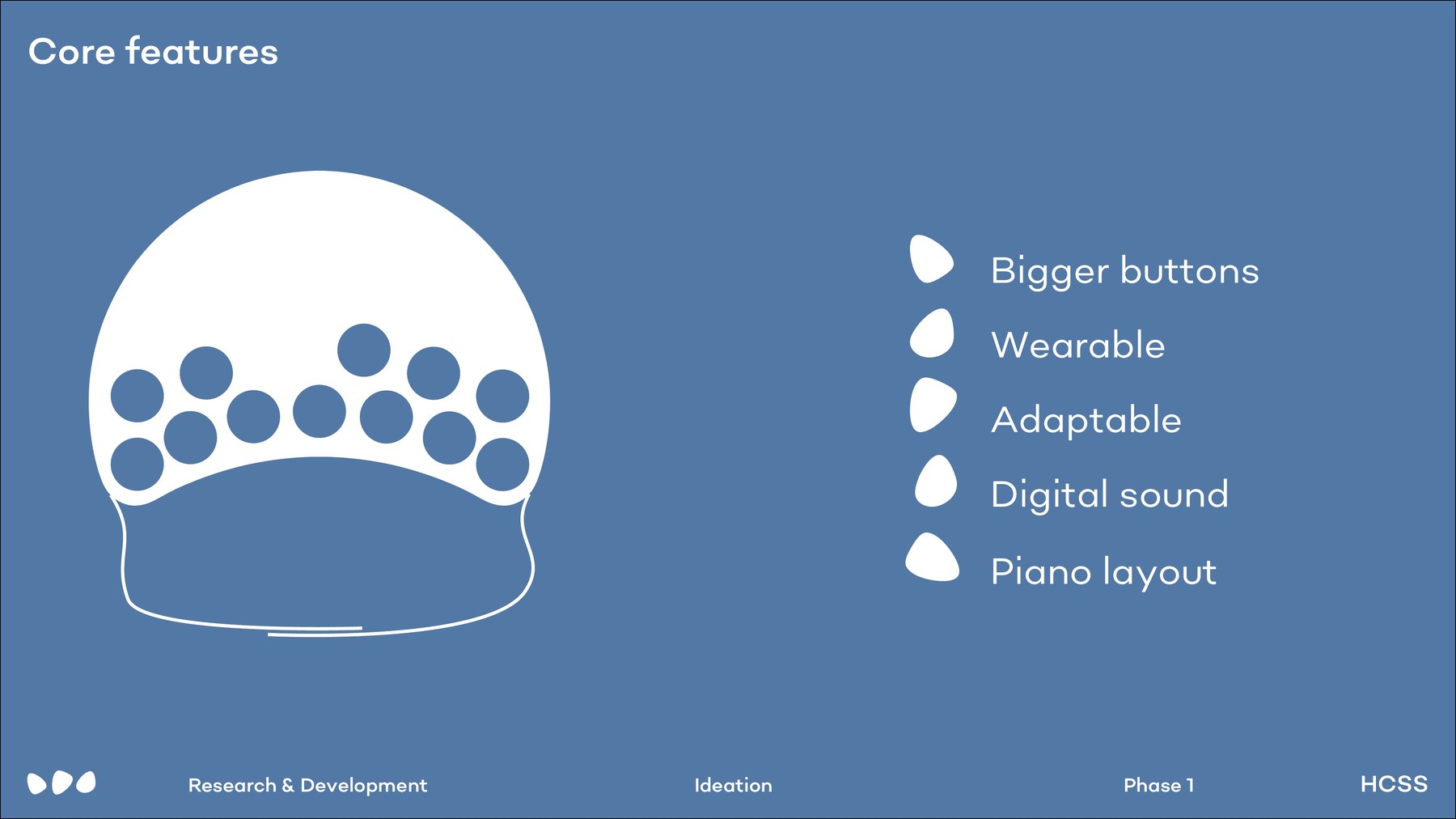
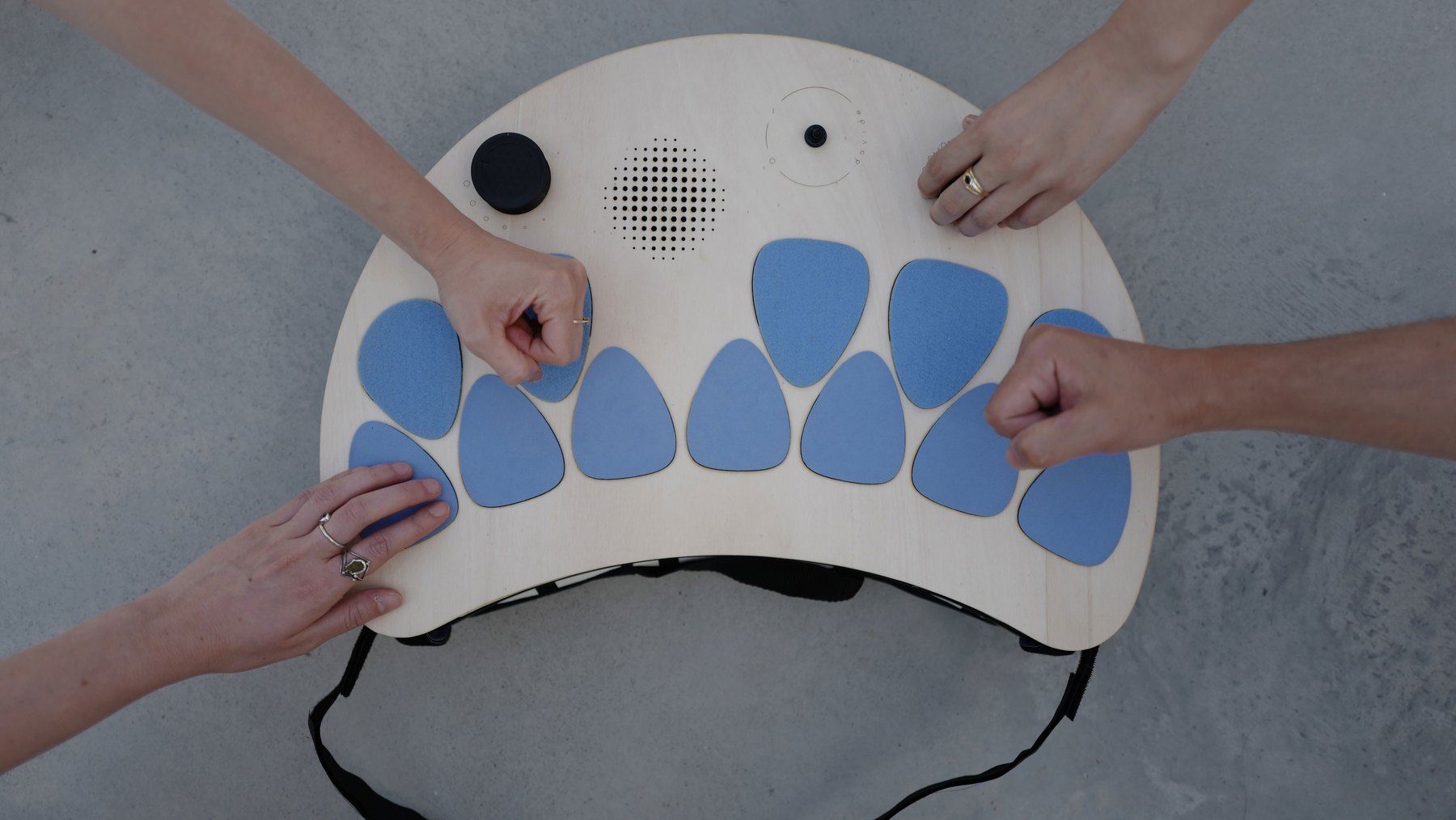
Bigger buttons. Large, irregular key shapes covering as much of the
surface as possible, so a whole hand or a fist lands on a note. Trade-off: fourteen keys
instead of a wider range — fewer notes, but every one of them reachable.
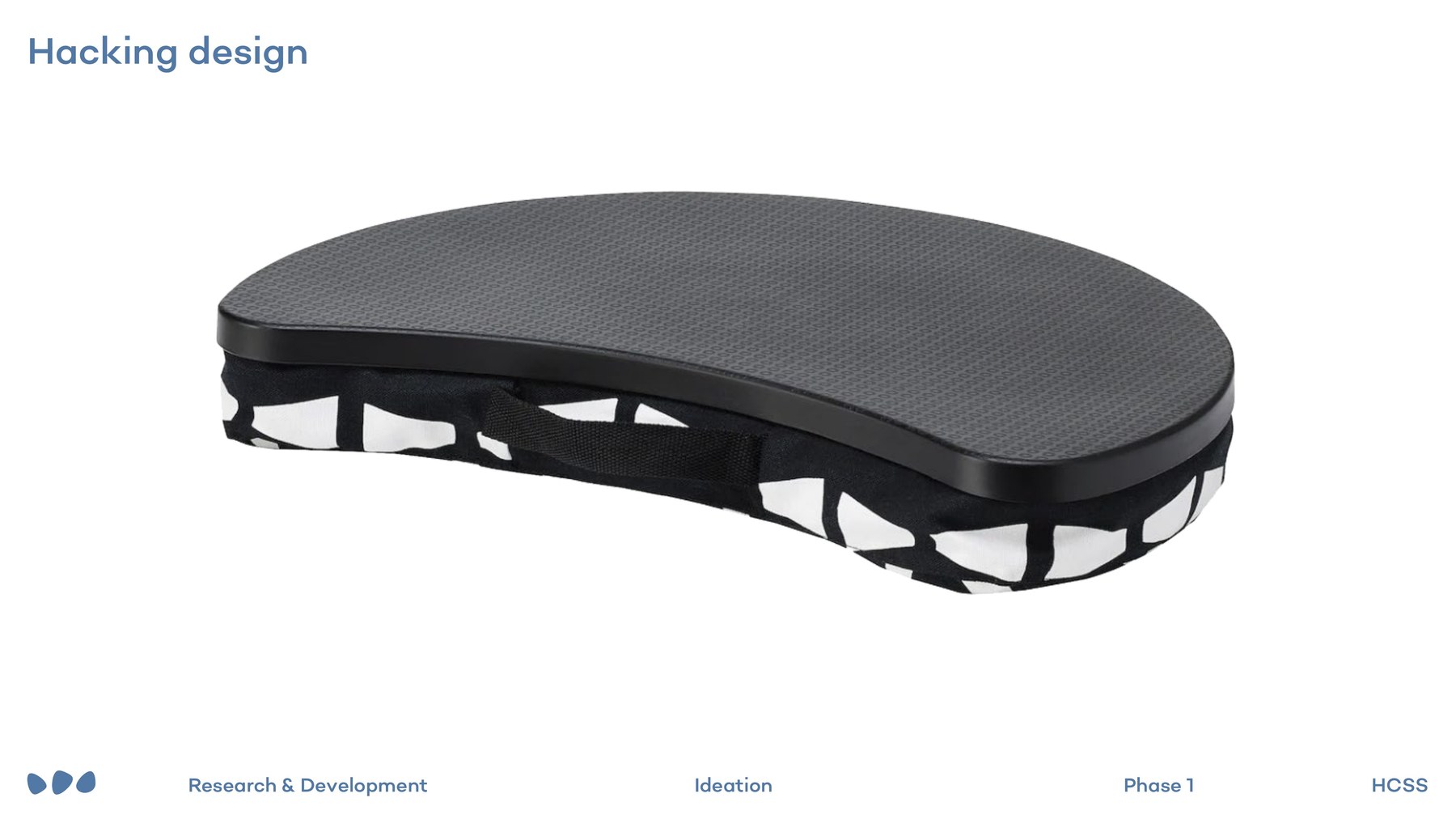
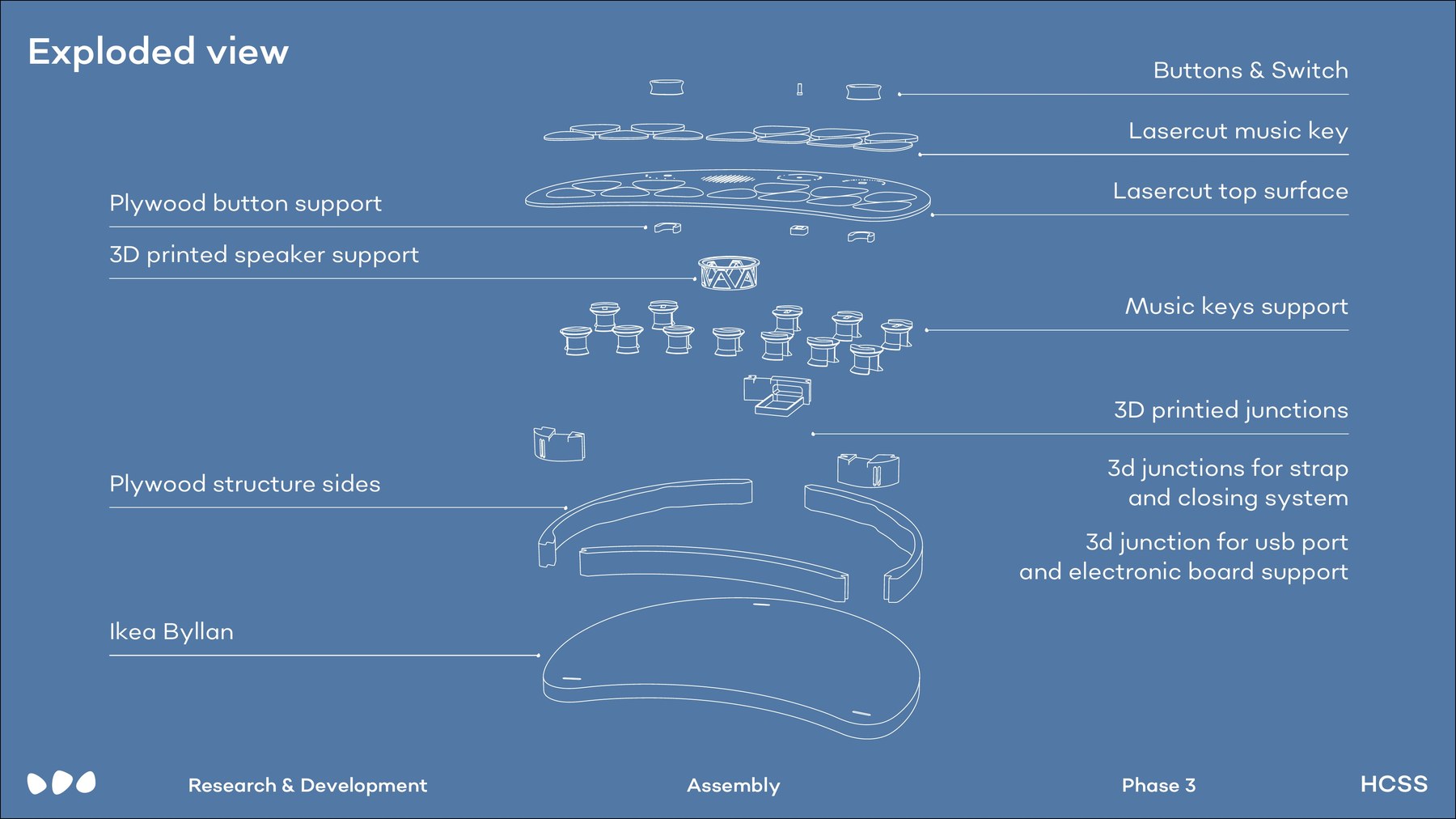
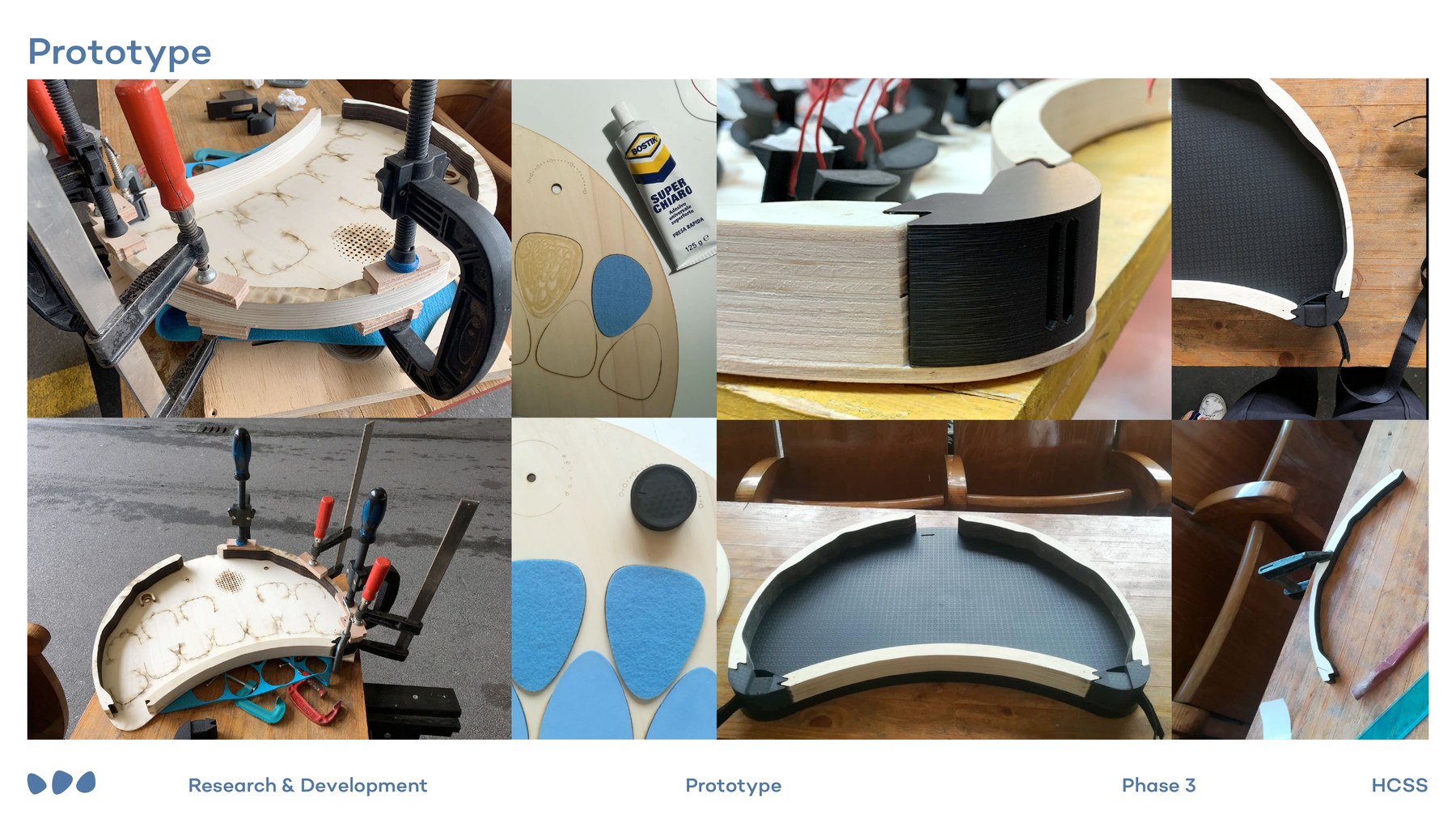
Wearable. A strap and 3D-printed junctions so it attaches to his
wheelchair or rests on his legs. It goes where he goes rather than waiting on a table.
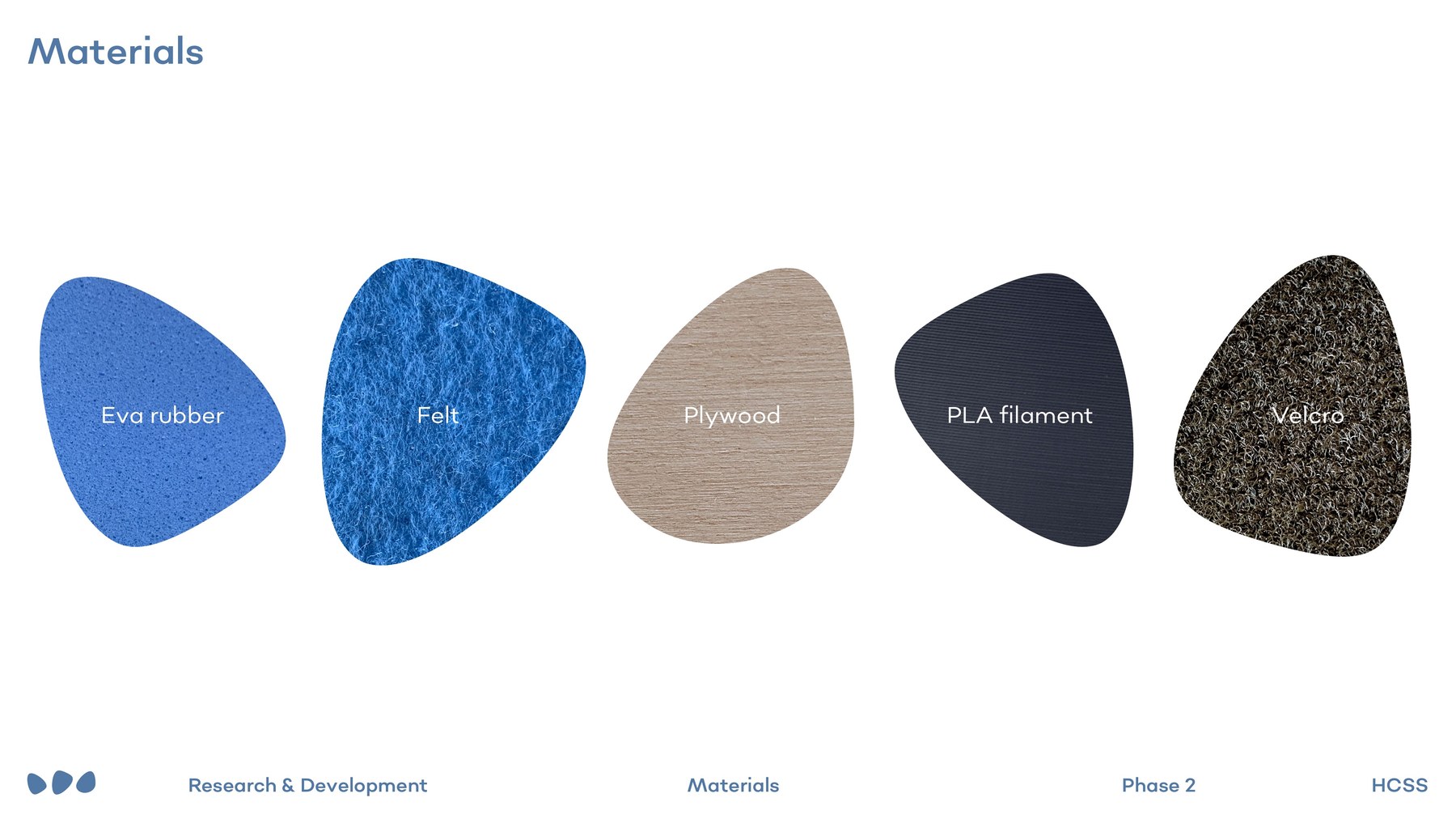
Adaptable. Key surfaces and knobs designed as separate, swappable pieces
— because the right texture and resistance can only be found by trying them.
Digital sound. An Arduino, an amplifier and a speaker instead of anything
acoustic. A digital note sounds the same however hard it's struck, which directly answers
the inconsistent-force constraint.
Piano layout. Keys arranged left to right by pitch, the arrangement every
music teacher already knows. Trade-off: it inherits an ergonomic convention designed for
hands unlike his — but it means he can be taught alongside everyone else, which was the
point.