01
Point
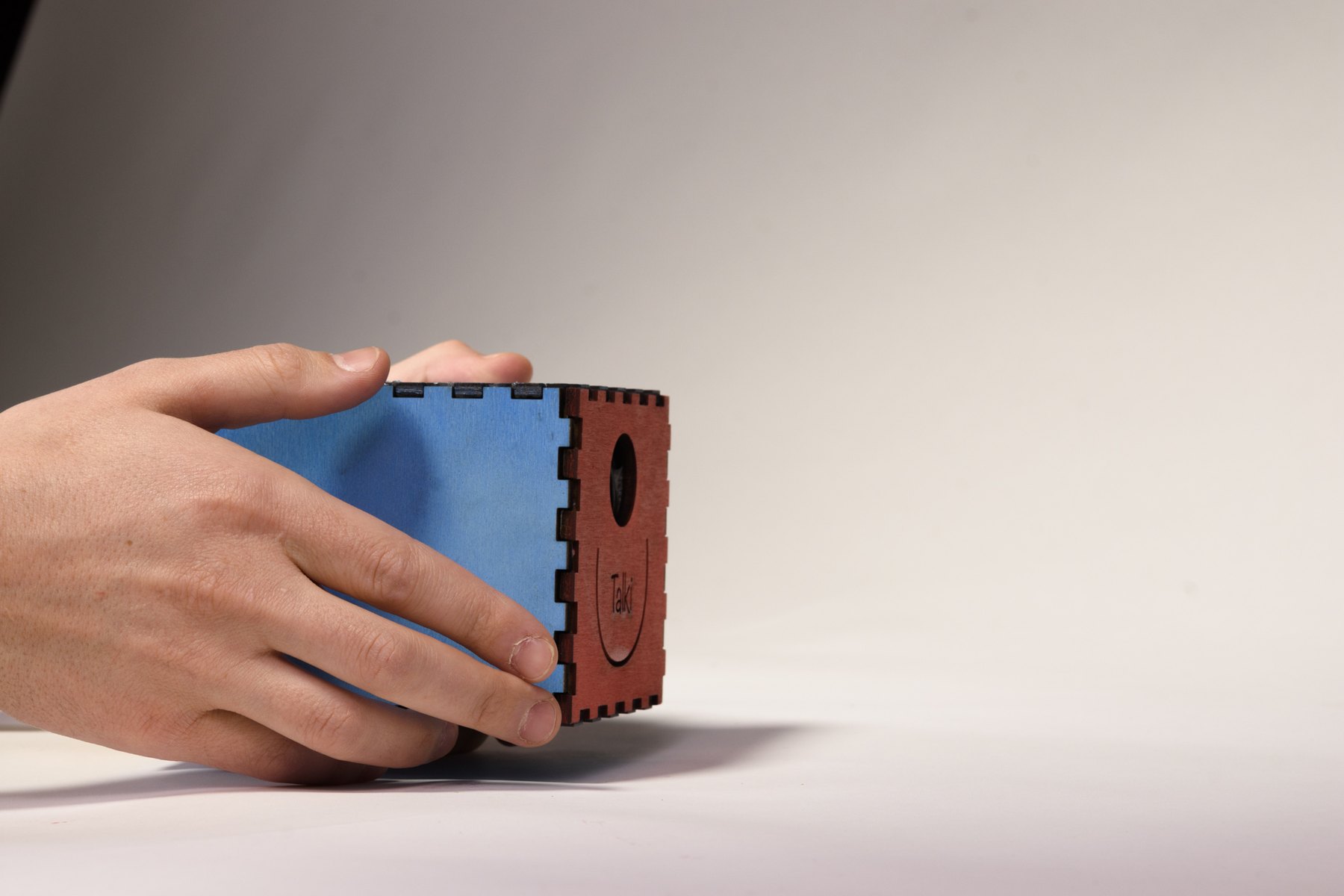
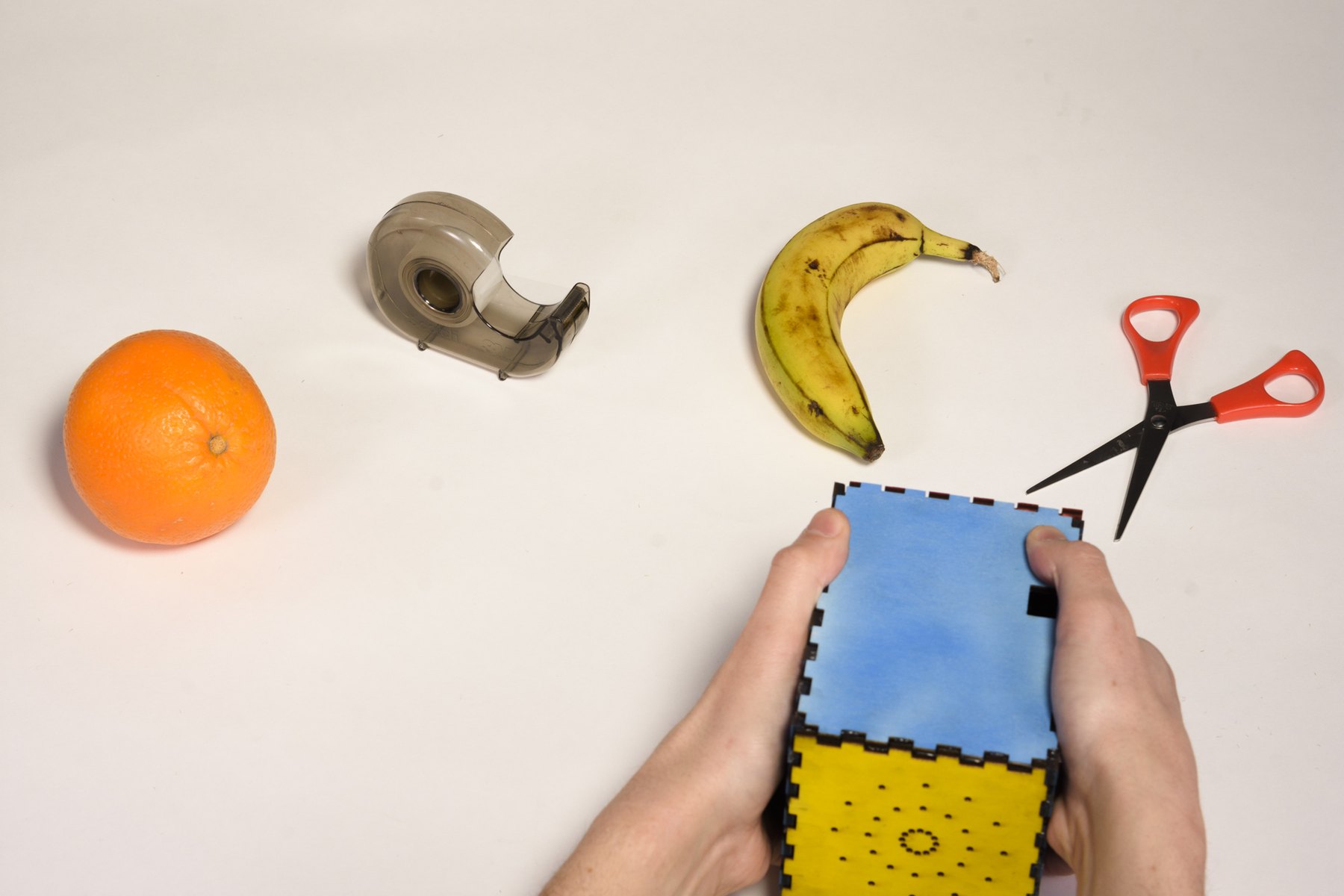
Point Talki at an object in the environment.
Tangible interaction · MAS in Interaction Design, SUPSI · 2020
A physical interface that turns everyday objects into language-learning opportunities.
Traditional language learning often starts from books, exercises or digital interfaces. We explored a different starting point: the physical world around the learner.
What if learning a word started from the object itself rather than from a page?
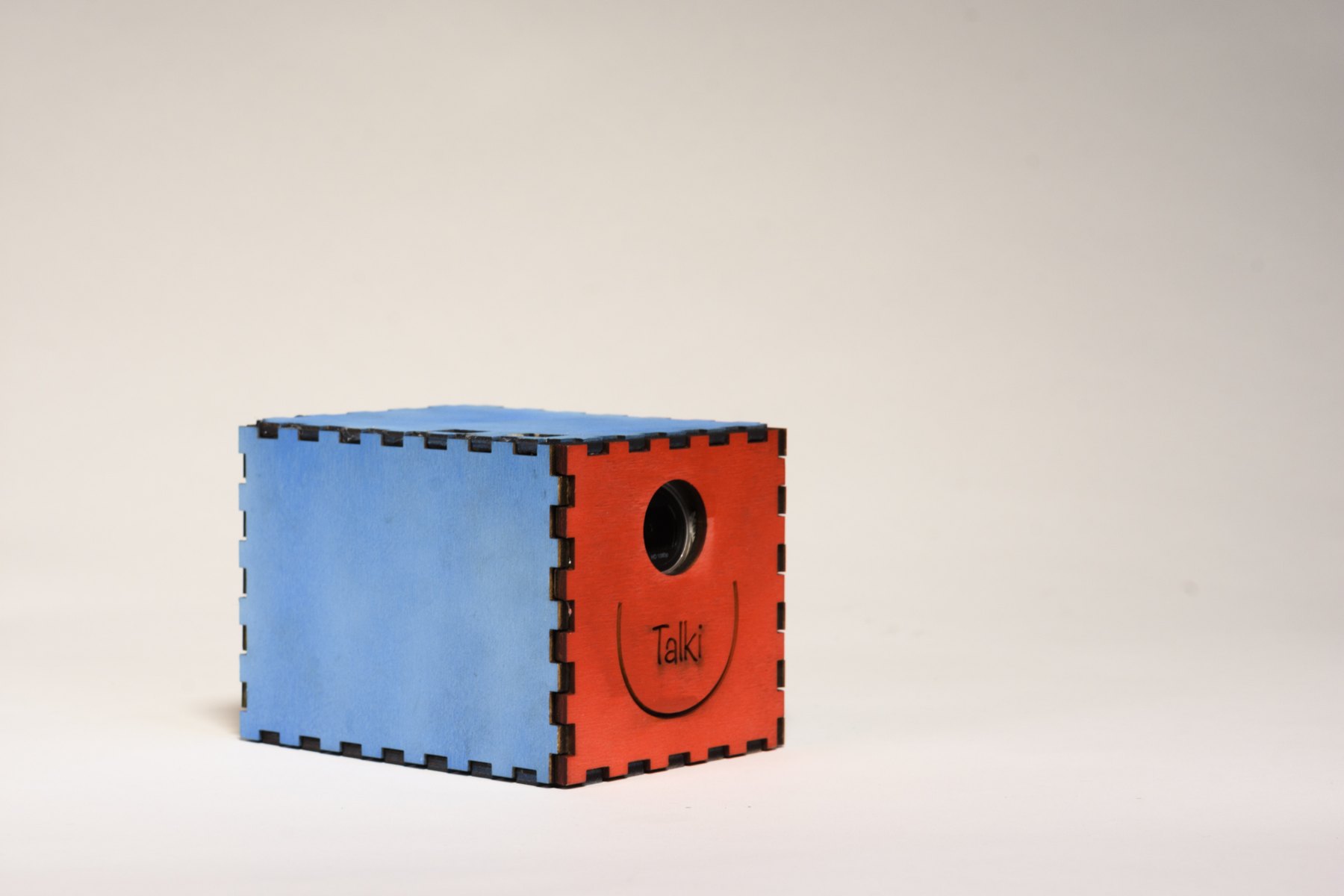
Talki is a physical interface with a camera and speaker. A child points it at an object, the system recognises it and provides the corresponding word and pronunciation in the selected language.
No screen. No typing. No menus. Just point and listen.
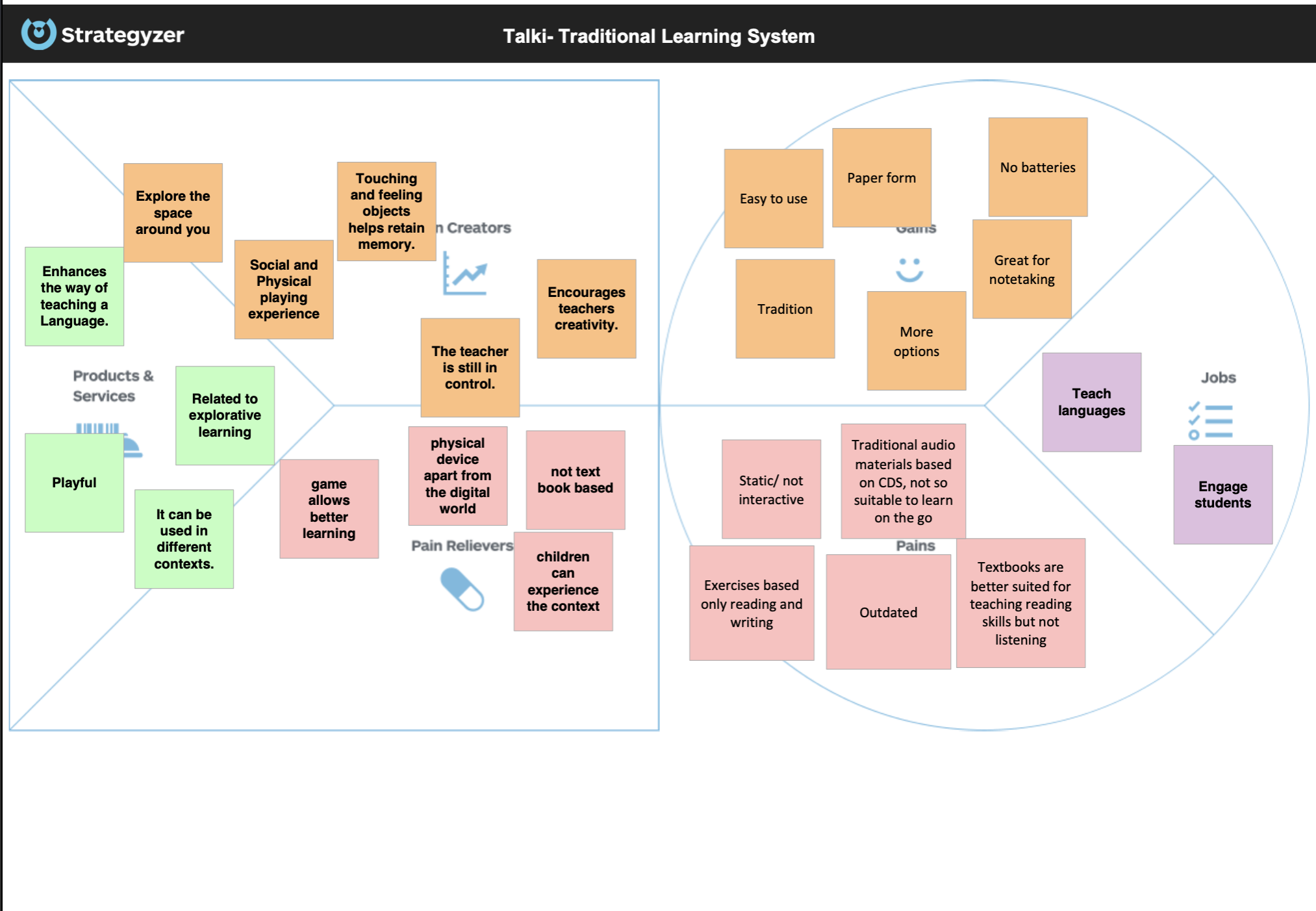
The project did not start from a technology looking for a problem. We explored the learning context through research, interviews, analysis of traditional and digital learning systems, Value Proposition Canvas work and Jobs-to-be-done thinking.
This part of the process mattered because it clarified the gap: learning systems are often built around static content, while much of language learning happens in relation to the objects, routines and actions in the learner's environment.
From that exploration, the opportunity became clearer: rather than adding another screen, we asked whether the physical environment itself could become part of the learning experience.
The project materials from this phase show a value-proposition-oriented exploration of the problem space. Traditional systems are familiar and easy to use, but are often static and text-based; digital systems are interactive and flexible, but can feel technical, screen- centred and full of distractions.
Traditional approaches: easy to use, familiar, useful for reading and writing, teacher remains in control, but often static and less interactive, limited support for listening, paper/textbook based.
Digital approaches: interactive, flexible, playful and gamified, can support individual or group learning, but can create screen-time concerns, may feel technical and distracting, and interaction often remains screen-centred.
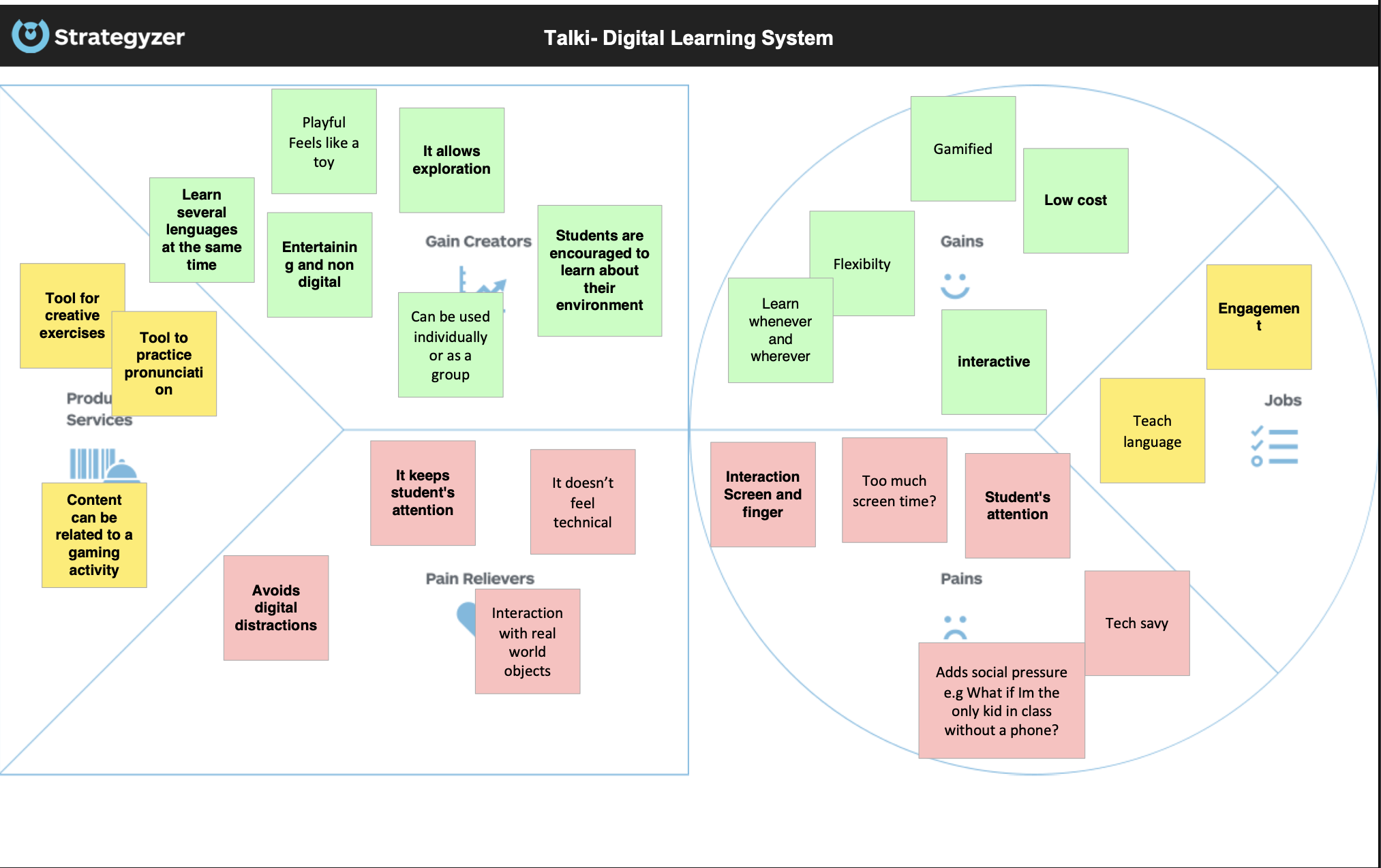
Rather than adding another screen to the learning experience, we explored whether the physical environment itself could become part of it.
The opportunity was to connect:
POINT → RECOGNISE → LISTEN
Instead of asking children to learn a word from a page or screen, Talki starts from something they can see and touch in the real world.
A mug, a pen, an apple or another everyday object becomes the trigger for the learning interaction. The object is not a lesson asset; it is the environment itself.
01
Point Talki at an object in the environment.
02
The system uses machine-learning / object-recognition capabilities to identify it.
03
Talki provides the corresponding word and pronunciation in the selected language.
04
The child can move through the environment and turn everyday objects into learning opportunities.
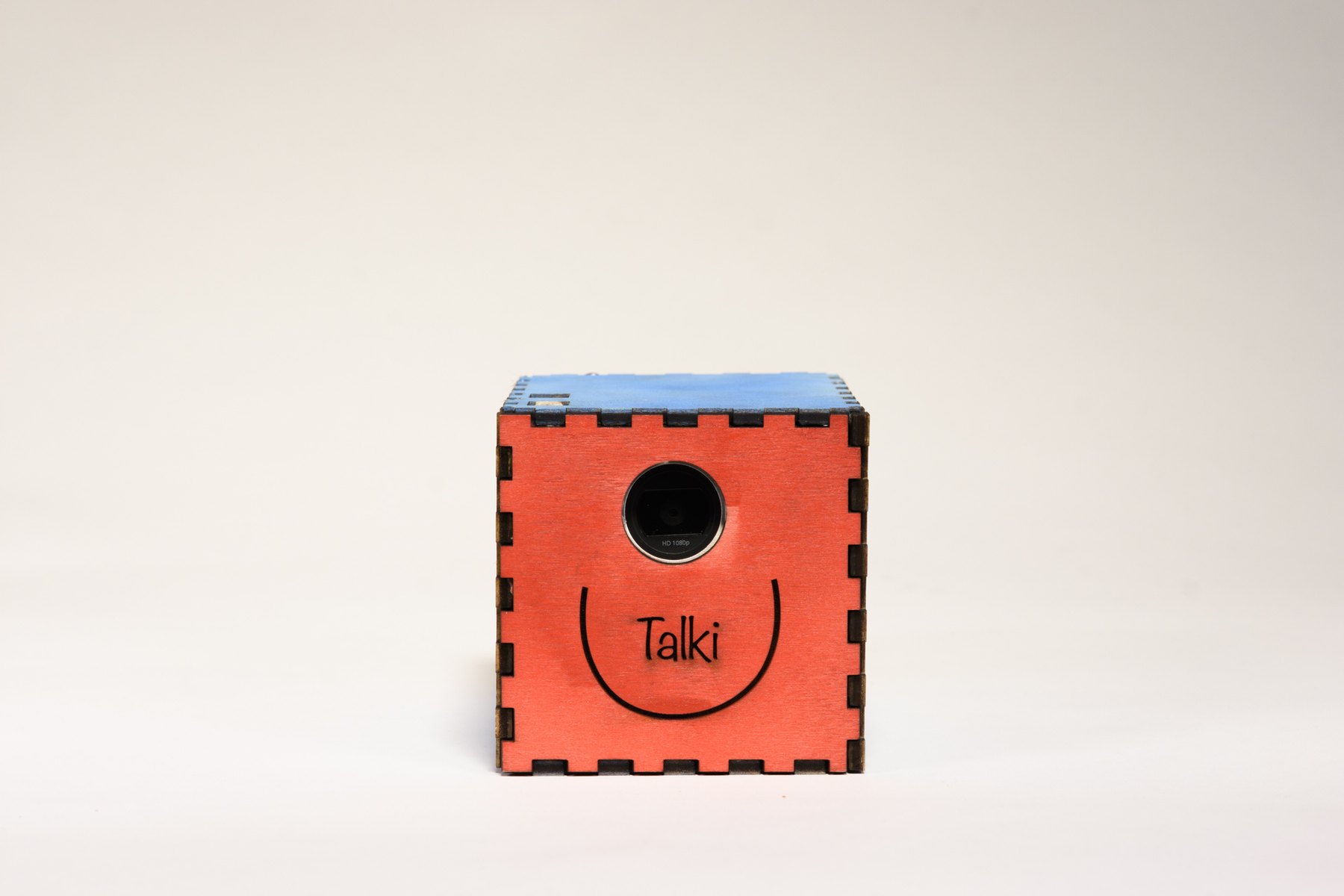
The concept was not left as a speculative interaction. We built a working physical prototype to explore the experience end-to-end.
The prototype combined a physical enclosure, camera, audio output and machine-learning capabilities, with external services supporting parts of the recognition and language pipeline.
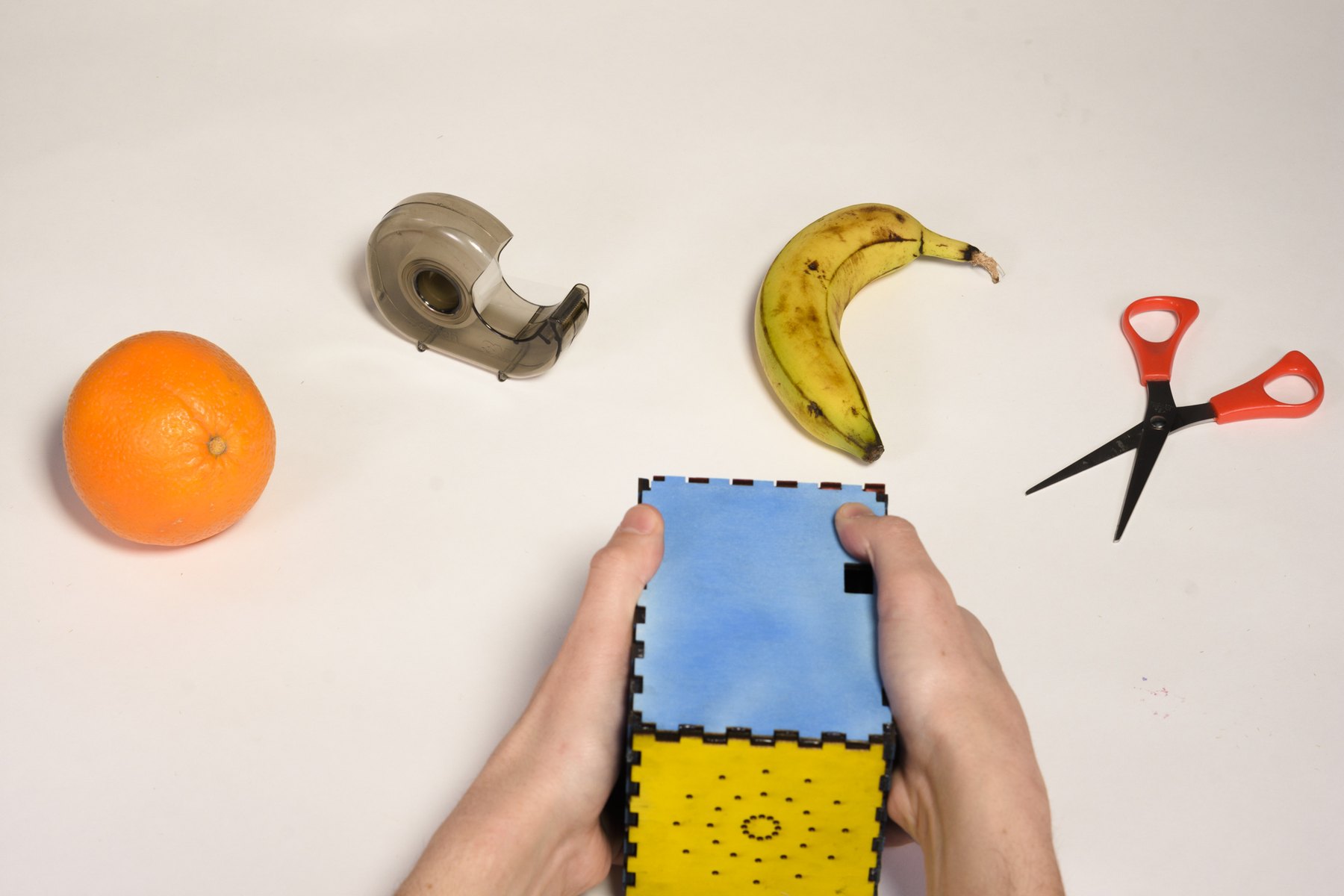
The research helped us frame the opportunity and define the interaction around a simple principle: learning should start from the world around the child.
We then translated this idea into a working physical prototype, using object recognition and audio to explore the experience end to end.
Physical. The physical form moved the experience away from a conventional screen-based learning interface.
No screen. Removing the screen reduced the interaction to its essential action: point and listen.
Audio. Audio made pronunciation part of the interaction rather than an additional exercise.
Exploration. The device allowed the child to turn the surrounding environment into a learning space.
Talki became a working exploration of how Machine Learning could disappear into a physical interaction.
The project brought together user research, value proposition work, interaction design, physical prototyping and emerging ML capabilities to explore a different model for language learning.
The most interesting part was not teaching a word to a machine — but exploring how a machine could make the world around a child part of the learning experience.